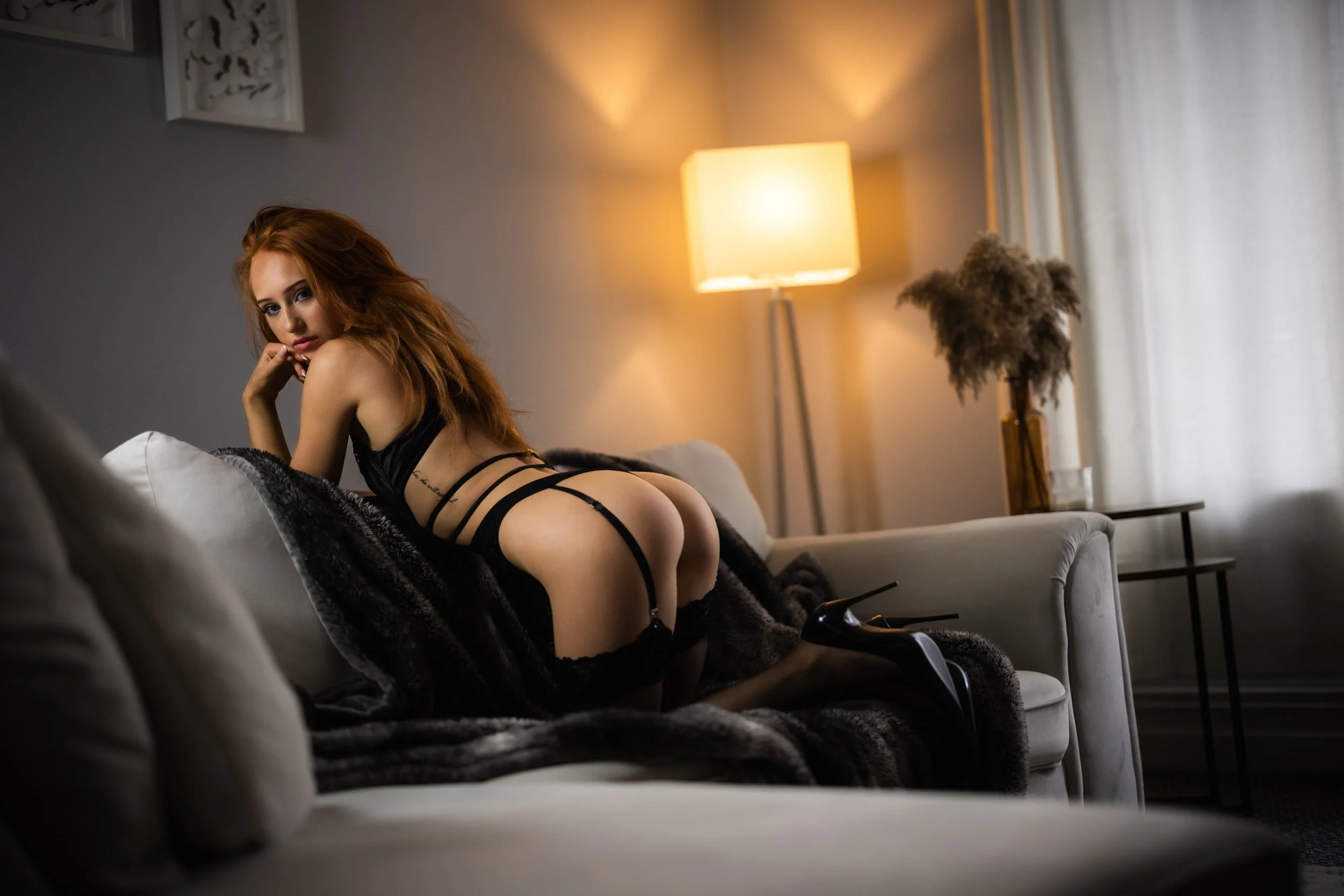
Most women don’t hate their body… They hate how they’ve been photographed
Let’s cut the bullshit straight away.
If you’ve ever looked at a photo of yourself and thought “I hate how I look”, that reaction probably has very little to do with your body and everything to do with how the image was made.
Bad light.
No direction.
A rushed photographer.
A camera pointed at you instead of someone actually seeing you.
That’s not a confidence issue. That’s a craftsmanship issue.
At Watson & Co., we see this constantly. Women arrive convinced they’re “awkward on camera”, “not photogenic”, or “only confident after losing X amount of weight”. None of that holds up once the environment, lighting, pacing, and intention change.
Confidence doesn’t magically appear when the shutter clicks.
It’s built deliberately.
The lie of “natural” photography
There’s a popular myth that the best photos are the most “natural”.
That you should just turn up, relax, and hope for the best.
That idea is trash.
Every powerful portrait you’ve ever stopped scrolling for was constructed:
The light was chosen on purpose
The angles were intentional
The pacing was controlled
The subject was directed not abandoned
When photographers hide behind the word natural, what they usually mean is lazy. No guidance. No leadership. No accountability for how the subject feels in front of the lens.
We don’t do that.
Why direction is everything
Most women don’t need “posing tips”.
They need clarity.
What to do with their hands.
Where to put their weight.
How to breathe.
When to slow down.
The moment someone takes control of the space calmly, confidently the nervous system settles. That’s when posture changes. Expression softens. Presence shows up.
This isn’t about forcing someone into a shape that isn’t them.
It’s about removing the noise so what is there can come through.
That’s the difference between content and portraiture.
Between documentation and identity.
Light doesn’t flatter it reveals
We’re not interested in blasting light at someone and hoping for the best.
We light with restraint.
Shadows create depth.
Contrast creates separation.
Darkness creates intimacy.
The goal isn’t to make someone look like a different person it’s to show them something they don’t usually get to see: strength, softness, control, presence. Sometimes all at once.
When lighting is intentional, it stops being about hiding flaws and starts being about shaping emotion.
The experience matters more than the photos
Here’s the part most photographers don’t want to admit:
The images are the output, not the product.
The real transformation happens during the shoot.
Being listened to
Being directed without being judged
Being allowed to take up space
Being seen without performing
That’s why our sessions are paced slowly.
Why nothing feels rushed.
Why silence is allowed.
Why feedback is constant but never overwhelming.
By the time the camera goes down, something has shifted and the images simply reflect that.
This isn’t about confidence. It’s about permission.
Most women don’t walk into our studio wanting to “feel sexy”.
They want permission to stop apologising for their presence.
Permission to exist without shrinking.
Permission to be seen without explanation.
Permission to look powerful, soft, or both without justifying it.
Photography done properly gives that permission back.
Why we do it this way
Watson & Co. wasn’t built to churn out pretty pictures.
It was built to challenge the way women experience being photographed.
No hype.
No forced empowerment slogans.
No fake vulnerability for the sake of content.
Just calm leadership, intentional craft, and images that feel like you not a version of you performing for someone else.
If you’ve never liked being photographed, that’s not a red flag.
It’s usually a sign you’ve never been photographed properly.
And that’s exactly what we do.